

Feminism and the Unflinching Art of Judy Chicago
 Judy Chicago, born Judith Sylvia Cohen in 1939, is an American artist, author, feminist, and educator whose groundbreaking work has profoundly reshaped the landscape of contemporary art. A pivotal figure in the feminist art movement of the 1970s, Chicago tirelessly challenged patriarchal narratives in art history and fought for the recognition and inclusion of women artists. Her ambitious, large-scale installations are not just artworks; they are powerful manifestos that reclaim women’s stories and experiences.
From Los Angeles to the Forefront of Feminist Art
Emerging from the male-dominated art scene of 1960s Los Angeles, Chicago deliberately changed her name to shed patriarchal ties and forge her own identity. Dissatisfied with the prevailing abstract and minimalist trends that often excluded women’s perspectives, she dedicated herself to creating art that spoke directly to female experience, history, and identity. This commitment led her to become a central figure in establishing feminist art education programs, most notably at California State University, Fresno, and later at CalArts, where she fostered a new generation of women artists.
Monumental Narratives: Iconic Works
Chicago’s most renowned works are celebrated for their scale, intricate detail, and uncompromising social commentary:
-
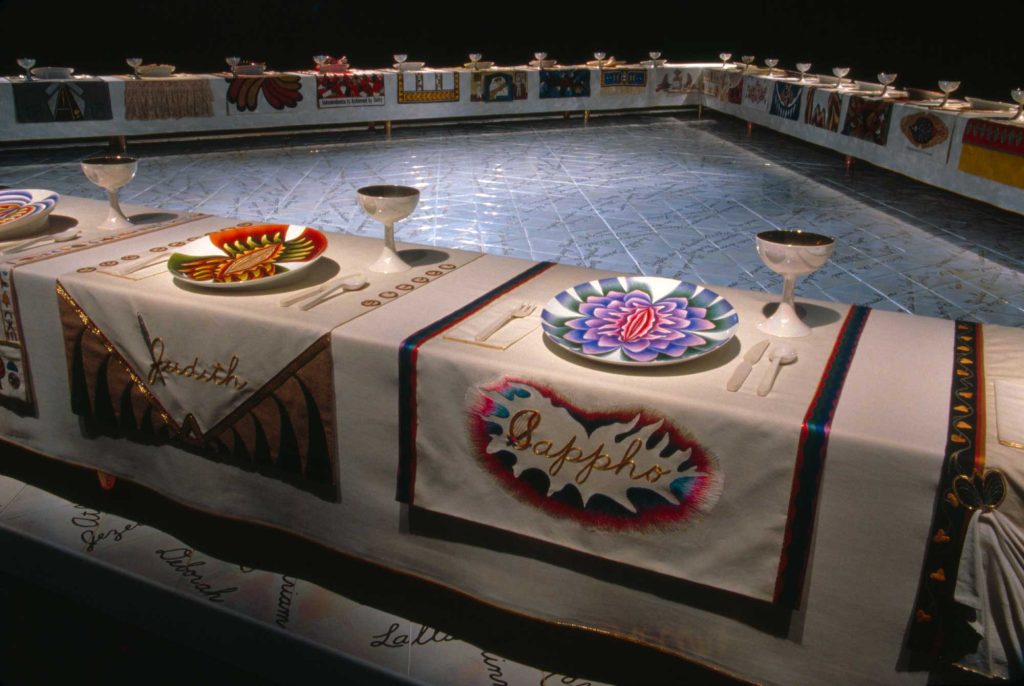
The Dinner Party (1974–1979): This monumental installation is arguably her most iconic creation. A triangular table, 48 feet on each side, is set with 39 elaborate place settings, each commemorating a mythical or historical woman. The ceramic plates, often featuring butterfly or vulvar imagery, and embroidered runners, created through extensive collaboration with needleworkers, celebrate women’s contributions to civilization that had been systematically erased from history. “The Dinner Party” is a powerful act of remembrance and an enduring symbol of feminist art.
-
The Birth Project (1980–1985): Following “The Dinner Party,” Chicago embarked on “The Birth Project,” focusing on the subject of birth, creation, and the female body, often overlooked or taboo in art. Working with over 150 needleworkers, she created a series of embroidered and stitched images that celebrate the transformative power of childbirth in various cultural contexts.
-
Powerplay (1982–1987) and The Holocaust Project (1985–1993): In later years, Chicago broadened her thematic scope, exploring issues of power, masculinity, and oppression in “Powerplay,” and confronting the horrors of the Holocaust in “The Holocaust Project: From Darkness into Light,” created in collaboration with her husband, photographer Donald Woodman. These works continued her commitment to tackling difficult subjects and using diverse media to convey complex messages.
Technique, Symbolism, and Collaborative Spirit
Chicago often employed materials and techniques historically associated with “women’s work” (ceramics, needlework) to elevate them to the realm of fine art, challenging traditional hierarchies. Her consistent use of central core imagery, often interpreted as vaginal or butterfly forms, is a deliberate reclamation of female sexuality and power. Furthermore, her collaborative working methods, involving numerous artisans and volunteers, reflect a feminist approach to art-making that values collective effort and shared vision.
A Lasting and Evolving Legacy
Judy Chicago’s impact extends far beyond her individual artworks. She sparked vital conversations about gender, power, and representation in the art world, leading to a re-evaluation of art history and a greater push for inclusivity. While her work initially faced controversy and criticism for its overt political and feminist stance, it has since been widely re-evaluated and embraced for its historical significance and its enduring relevance. She opened doors for countless women artists and remains a formidable voice in the ongoing struggle for equality and recognition. Her work continues to provoke, inspire, and demand that women’s voices and histories be seen and celebrated.